What a Rural Health Unit Offers for Free: Services, Hours and Who Can Use It
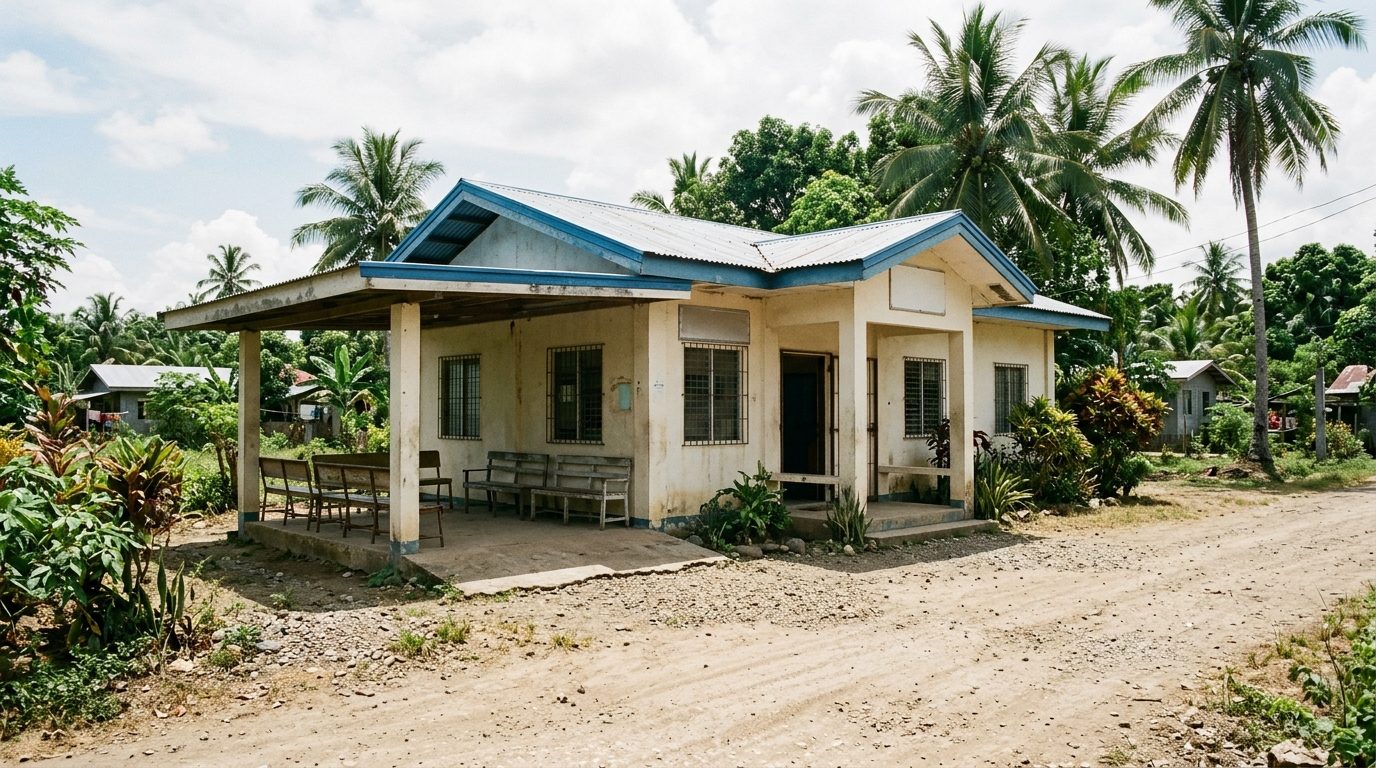
Quick Answer: A rural health unit is the government clinic every municipality runs, and most of what it does is free: doctor consultations, childhood vaccines, prenatal care and delivery, TB treatment, anti-rabies shots, family planning, and through PhilHealth YAKAP, laboratory tests and up to ₱20,000 a year of medicines. Here is the full list and how to use it.
Every municipality in the Philippines runs a rural health unit, a government clinic with a doctor in charge, and most of what it does is free. There were 2,674 rural health units and city health centers in 2025 (Statista, Department of Health data), each serving on average 29 barangays with a staff of about 36. This guide lists the free services, explains what PhilHealth YAKAP adds, and shows how to use your RHU. Find yours in the rural health unit directory; for how RHUs relate to barangay health stations and city health offices, see our explainer on the three levels.
What is free at a rural health unit?
| Service | What you get | Programme or law behind it |
|---|---|---|
| Consultation | Check-up with the physician, nurse or midwife; referral to hospital when needed | Local Government Code; Universal Health Care Act (RA 11223) |
| Childhood immunisation | BCG, hepatitis B, pentavalent, oral and inactivated polio, pneumococcal, measles-rubella, and campaign vaccines | Expanded Program on Immunization, vaccines supplied by DOH |
| Maternal care | Prenatal check-ups, iron and folic acid, tetanus vaccine, delivery at RHUs with a birthing facility, postnatal visits | DOH maternal, newborn and child health programme; PhilHealth maternity care package |
| Family planning | Counselling, pills, injectables, implants, IUD insertion, condoms | Responsible Parenthood and Reproductive Health Act; DOH commodities |
| Tuberculosis | Sputum testing, chest X-ray referral, six months of free treatment with supervision | National Tuberculosis Program (DOTS) |
| Animal bites | Wound care, anti-rabies vaccine and immunoglobulin where indicated | DOH-certified Animal Bite Treatment Centers at RHUs |
| HIV and STI | Testing and counselling; treatment through linked hubs; social hygiene clinics in cities | Philippine HIV and AIDS Policy Act (RA 11166) |
| Dental | Check-ups, extractions, fluoride for children, at RHUs with a dentist | DOH oral health programme |
| Nutrition | Growth monitoring, vitamin A, deworming, supplementary feeding for malnourished children | DOH and National Nutrition Council |
| Basic medicines | Antibiotics, analgesics, antihypertensives and other essentials from RHU stock while supplies last | DOH medicine access programmes; Botika ng Barangay |
| Laboratory, screening and medicines beyond stock | 13 laboratory tests, six cancer screening tests on referral, and up to ₱20,000 a year of medicines from 75 molecules at accredited pharmacies | PhilHealth YAKAP, for members registered with the RHU as their YAKAP clinic |
The Department of Health supplies the programme commodities; the municipality pays the staff and runs the building. A typical citizen's charter, such as Pozorrubio's, lists each service, the documents required and the processing time.
What does PhilHealth YAKAP add?
Most RHUs are accredited PhilHealth YAKAP clinics. Once you register with yours (at the RHU, through the PhilHealth member portal or the eGovPH app), the RHU doctor's consultation triggers the rest: laboratory tests at the RHU or its partner lab, referral for cancer screening (mammogram, breast ultrasound, low-dose chest CT, alpha-fetoprotein, liver ultrasound, colonoscopy) at accredited facilities at no charge, and prescriptions through the GAMOT app that accredited pharmacies fill free up to ₱20,000 a year for the member and separately for each dependant, according to PhilHealth's YAKAP FAQ. Only the doctor at the clinic where you are registered can prescribe under the programme, which is why the registration matters. Our YAKAP guide covers the steps.
When is it open, and what should you bring?
- Hours: usually 8 a.m. to 5 p.m. on weekdays, with programme days: immunisation on a fixed day, prenatal clinic on another, dental and TB on others. Birthing facilities run around the clock. Call first; the number is on the RHU's listing.
- Bring: a valid ID, your PhilHealth number, your child's immunisation card, previous prescriptions or test results, and a barangay certificate if the municipality asks for proof of residence.
- Expect: a queue on programme days; first-come first-served unless the municipality runs an appointment or queueing system. Makati, Quezon City and Manila do; see how to book a health center appointment.
Who can use it?
Residents of the municipality are the RHU's population, and free services are meant for them; in practice nobody is turned away in an emergency and most RHUs treat non-residents who walk in. For YAKAP benefits you must be registered with that clinic, and you can be registered at only one at a time; dependants can be registered elsewhere if another clinic is nearer them. Overseas Filipino workers, senior citizens, persons with disability, 4Ps beneficiaries and solo parents are all covered by PhilHealth and therefore by YAKAP.
What can the RHU not do?
Admit you overnight (except lying-in for births), operate, or run advanced tests. When you need a hospital the RHU refers you, usually to the district or provincial hospital and from there to the regional DOH hospital, where a ward bed is now free for PhilHealth members under zero balance billing. Our guide to public and private hospitals explains what PhilHealth pays at each.
Find your RHU in the directory, for example Carmona Rural Health Unit in Cavite, and check the health offices list for cities.
Frequently asked questions
- What is a rural health unit?
- The main government primary care facility of a municipality, headed by the municipal health officer, a licensed physician, with public health nurses, midwives, a medical technologist, a sanitary inspector and usually a dentist. It supervises the barangay health stations, runs the national health programmes locally and refers patients to hospital. Cities call the equivalent a city health office or health center.
- What services are free at an RHU?
- Consultations with the doctor, nurse or midwife; childhood immunisation under the Expanded Program on Immunization; prenatal, delivery (where there is a birthing facility) and postnatal care; family planning counselling and supplies; tuberculosis testing and treatment under DOTS; anti-rabies vaccine at certified animal bite treatment centers; HIV testing at many; dental check-ups; basic medicines from stock; and, for members registered with the RHU as a PhilHealth YAKAP clinic, 13 laboratory tests, cancer screening on referral and up to ₱20,000 a year of prescribed medicines.
- What are the opening hours?
- Typically 8 a.m. to 5 p.m., Monday to Friday, with specific programme days (immunisation, prenatal, dental, TB) on set weekdays. Birthing facilities run 24 hours. Hours vary by municipality; the listing on Healthcare Philippines shows the phone number to check.
- Who can use an RHU?
- Residents of the municipality first, and anyone in an emergency. For PhilHealth YAKAP benefits you must register with that RHU as your YAKAP clinic; you may register at only one clinic at a time, and your dependants can be registered at a different one if it is nearer them.
- Does an RHU have a laboratory?
- Most have a basic laboratory (blood count, urinalysis, blood sugar, sputum microscopy, pregnancy tests) run by a medical technologist; some have X-ray. Tests the RHU cannot do are referred to a partner laboratory and remain free under YAKAP.
- Can I get a medical certificate at the RHU?
- Yes. Medical certificates for employment, school and travel are issued after examination; many municipalities charge a small fee for the certificate itself, set by local ordinance, even when the consultation is free.