TB Testing and Free Treatment at Health Centers (TB-DOTS) in the Philippines
Quick Answer: The Philippines has the world's third-largest TB burden: 6.8 percent of the 10.7 million cases in 2024, about 625 per 100,000 people, and an estimated 98 deaths a day. Testing and the full course of treatment are free at rural health units and city health centers under the National TB Program, and PhilHealth pays accredited DOTS centres ₱7,800 per case. This guide covers symptoms, where to get tested, what the six-month regimen involves, what the law says about TB and your job, and the 2030 targets.
Tuberculosis is the Philippines' biggest infectious killer, and the cure is free. The country carried 6.8 percent of the world's 10.7 million TB cases in 2024, the third-largest share after India and Indonesia, which works out to about 625 Filipinos falling ill per 100,000 people and an estimated 98 deaths a day, according to the World Health Organization and DOH in November 2025. Testing, medicines and follow-up are free at the TB-DOTS facility of every rural health unit and city health center under the National TB Program, and PhilHealth pays accredited centres ₱7,800 a patient. This guide covers symptoms, tests, the treatment, what the law says about your job, and where the programme is heading. Facilities are listed under clinics and medical laboratories on Healthcare Philippines.
What are the symptoms, and who should get tested?
The WHO fact sheet lists a prolonged cough, sometimes with blood, fatigue, weight loss, fever and night sweats. About a quarter of the world's population carries the bacteria without being sick or contagious; 5 to 10 percent go on to develop the disease, and babies and children are at higher risk. Symptoms can stay mild for months, which is how TB spreads unnoticed, so anyone with a cough that lasts and any of the other signs should be tested. So should household contacts of a person on treatment: the DOH now offers shorter TB preventive treatment to contacts, including contacts of drug-resistant cases, and enrolment rose more than 50 percent in 2024.
Where do you get tested for free, and what tests are used?
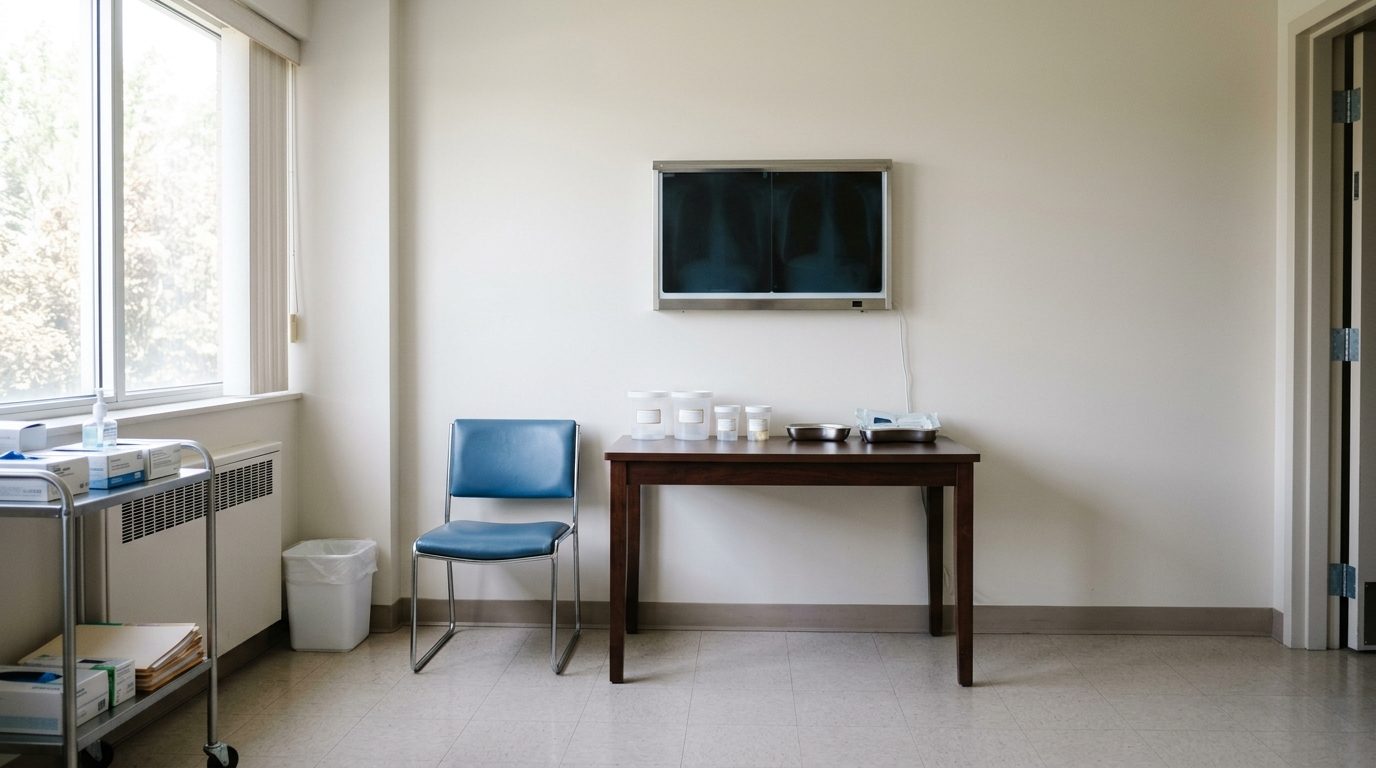
Go to the TB-DOTS unit of your health center; every rural health unit and city health office runs one, as our guides to rural health units and city health offices describe. The nurse takes a history, collects sputum and arranges the tests. Three are in use. Sputum microscopy is the traditional test. Chest X-ray is now the main screening tool: the DOH uses ultra-portable, AI-read X-ray units in communities and workplaces. Nucleic acid amplification tests such as GeneXpert, recommended by the WHO, confirm the diagnosis in hours and detect rifampicin resistance at the same time. Section 7 of Republic Act 10767, the Comprehensive TB Elimination Plan Act, requires the DOH to provide free laboratory services through its hospitals and a reliable free supply of drugs at local health centers, and Section 12 makes every public and private facility notify the DOH of each case. If you would rather pay for speed, private laboratories and hospitals do chest X-rays and GeneXpert; the Philippine General Hospital lists a chest X-ray at ₱165 for service patients and ₱315 to ₱445 for pay patients. Our guide to diagnostic centers and lab tests covers the private route.
What is the treatment, and what is free?
| Step | Where | Cost |
|---|---|---|
| Screening and consultation | RHU or city health center TB-DOTS unit; DOH hospital; community X-ray drives | Free |
| Sputum microscopy, GeneXpert, chest X-ray | Health center or its referral laboratory; DOH hospitals | Free under the National TB Program (RA 10767 Sec. 7) |
| Drug-susceptible TB: 6 to 8 months of daily fixed-dose combination tablets, observed by a treatment partner | TB-DOTS facility nearest home or work | Free; PhilHealth pays the facility ₱4,875 for the intensive phase and ₱2,925 for maintenance |
| Drug-resistant TB: all-oral 6-month regimen | DOH-designated treatment centres and hospitals | Free through the programme; up to ₱400,000 if bought privately |
| Preventive treatment for household contacts | Health center | Free |
| Private consultation, tests and medicines | Private hospitals and clinics | Chest X-ray from ₱165 to ₱445 (PGH rates); medicines over ₱2,000 for a six-month course |
DOTS, directly observed treatment short-course, means a health worker or trained treatment partner watches you take every dose for the whole regimen of six to eight months, as DOLE Department Order 73-05 summarises it. For drug-resistant TB the Health Secretary told the WHO in November 2025 that the all-oral regimen now in use cuts treatment from two years to six months with better success rates. The PhilHealth TB-DOTS package of ₱7,800 covers diagnostics, consultations, drugs and counselling for new, relapse, treatment-after-failure and transfer-in cases, adults and children, at accredited centres, so a member should not be asked to buy anything.
One caveat. A Rappler investigation published 8 September 2026 traced two failed and four cancelled DOH biddings for TB medicines between 2023 and 2025, worth over ₱2 billion, to stockouts that disrupted treatment for about 700,000 patients, with 30 shortage reports to the patient group TB HEALS from 2025 to August 2026. If your health center runs short, it should refer you to another DOTS facility rather than let you skip doses; a six-month drug-susceptible course bought privately costs more than ₱2,000 and a drug-resistant course up to ₱400,000, so ask before paying.
What does the law say about TB and your job?
DOLE Department Order 73-05, issued 30 March 2005, makes a TB prevention and control policy mandatory in every private establishment, worksite and workplace, drawn up jointly by management and workers and folded into the occupational safety and health programme. Its social policy section is blunt: workers who have or had TB shall not be discriminated against, shall be supported with adequate diagnosis and treatment, remain entitled to work for as long as the company's accredited health provider certifies them medically fit, and shall be restored to work as soon as the illness is controlled. Employers must, at minimum, refer workers and family members with TB to public or private DOTS centres, and the order points to the TB benefits of the ECC, SSS and PhilHealth. A company doctor's fit-to-work certificate, not a positive test, decides whether you keep working.
Where is the programme heading?
The Philippine Strategic TB Elimination Plan Phase 2 for 2025 to 2030, launched nationally in 2025, aims to cut TB deaths from 18 to 5 per 100,000 and incidence from 643 to 300 per 100,000 by 2030, and to screen 12.7 million people by chest X-ray in 2026 on the way to 79.5 million over six years, according to the DOH launch reported by SunStar. The 2026 budget proposal for TB services was ₱4.2 billion, nearly double the ₱2.6 billion of 2025. For you, the practical version is simple: a cough that will not go away is a free consultation at Carmona Rural Health Unit, the Cebu City Health Department, the Zamboanga City Health Office laboratory, or the health center nearest you.
Frequently asked questions
- Is TB treatment free in the Philippines?
- Yes at government facilities. Republic Act 10767 requires the DOH to provide free laboratory services through its hospitals and a reliable free supply of anti-TB drugs at local health centers, and the National TB Program runs treatment through DOTS facilities in rural health units and city health centers. PhilHealth pays accredited TB-DOTS centres a ₱7,800 package per patient, ₱4,875 for the intensive phase and ₱2,925 for the maintenance phase, covering tests, consultations, drugs and counselling.
- What are the symptoms of TB?
- A prolonged cough, sometimes with blood, fatigue, weight loss, fever and night sweats, according to the World Health Organization. Symptoms can stay mild for months, so a person can spread TB without knowing. TB usually affects the lungs but can affect the kidneys, brain and spine. The WHO advises seeking care for a prolonged cough, fever or unexplained weight loss, because early treatment stops transmission and improves recovery.
- Where can I get a free TB test?
- At the TB-DOTS facility of your rural health unit or city health center, or at a DOH hospital. The DOH now screens with portable AI-read chest X-rays and diagnoses with WHO-recommended nucleic acid amplification tests such as GeneXpert, which also detect drug resistance, alongside sputum microscopy. Bring a valid ID and describe your symptoms; the health center will collect sputum and refer you for X-ray or GeneXpert if it has no machine on site.
- How long is TB treatment?
- Six to eight months of daily medicines for drug-susceptible TB under DOTS, with the first two months as the intensive phase and the rest as maintenance, each dose watched by a treatment partner. For drug-resistant TB the DOH now uses an all-oral regimen that cuts treatment from two years to six months with a higher success rate. Stopping early is what creates drug resistance, so finish the course even when you feel well.
- Can I be fired for having TB?
- No. DOLE Department Order 73-05 makes a TB prevention and control policy mandatory in every private workplace and states that workers who have or had TB shall not be discriminated against, must be supported with diagnosis and treatment, remain entitled to work as long as the company's accredited health provider certifies them fit, and must be restored to work once the illness is controlled. Employers must refer workers and their families to DOTS centres.
- How much does TB treatment cost if I go private?
- The medicines alone cost more than ₱2,000 for a six-month drug-susceptible course and up to ₱400,000 for drug-resistant TB, according to a September 2026 Rappler report on medicine shortages. Tests are extra: the Philippine General Hospital's rate card lists a chest X-ray at ₱165 for service patients and ₱315 to ₱445 for pay patients. At a health center all of it is free, so the private route is worth it only for speed or privacy.