Giving Birth in the Philippines: Health Center, Lying-In Clinic or Hospital, and the PhilHealth Maternity Package
Quick Answer: Prenatal check-ups are free at your rural health unit or city health center, and since 30 April 2026 PhilHealth pays the whole cost of a low-risk normal delivery in a ward: ₱14,000 at an accredited lying-in clinic or birthing home, ₱29,000 in a hospital, and ₱58,000 to ₱62,000 for a caesarean, with no balance billing in basic accommodation. This guide compares the three settings, lists what PhilHealth pays and what you still pay, and covers high-risk referral, birth registration, maternity leave and breastfeeding rights.
You have three places to give birth in the Philippines: a birthing home or lying-in clinic, usually attached to a health center; a hospital; or, in practice for many families, at home, which the Department of Health discourages. The money changed on 30 April 2026. Under PhilHealth Circulars 2026-0005 and 2026-0006, a normal delivery is paid at ₱14,000 in an accredited lying-in clinic and ₱29,000 in a hospital, a caesarean at ₱58,000 to ₱62,000, and prenatal and postpartum care on top, with no co-payment in a ward bed. Prenatal check-ups are free at your rural health unit or city health center. This guide compares the settings, shows what PhilHealth pays and what you still pay, and covers high-risk referral, registration, leave and breastfeeding. Facilities are listed under clinics and hospitals on Healthcare Philippines.
Where do you get prenatal care, and what does it include?
Start at the health center as soon as you know you are pregnant. Consultations, iron and folic acid, calcium, tetanus vaccination and deworming are free there, as our guide to what a rural health unit offers explains, and PhilHealth now pays the facility for a full programme. The Expanded Maternity Care Benefit FAQ sets eight visits, following DOH policy: one in the first trimester, two in the second and five in the third. It pays for a first-trimester laboratory set (pregnancy test, blood typing, CBC, urinalysis, hepatitis B, HIV and syphilis screening), an oral glucose tolerance test in the second trimester, a repeat CBC and urinalysis in the third, a transvaginal ultrasound early and a pelvic ultrasound later. Every pregnant woman is assigned a care coordinator, and the circular asks pregnant women to register with a PhilHealth YAKAP clinic, which is usually the same health center.
Health center, lying-in clinic or hospital: which one?
| Setting | What it handles | PhilHealth pays (from 30 April 2026) | Typical out of pocket |
|---|---|---|---|
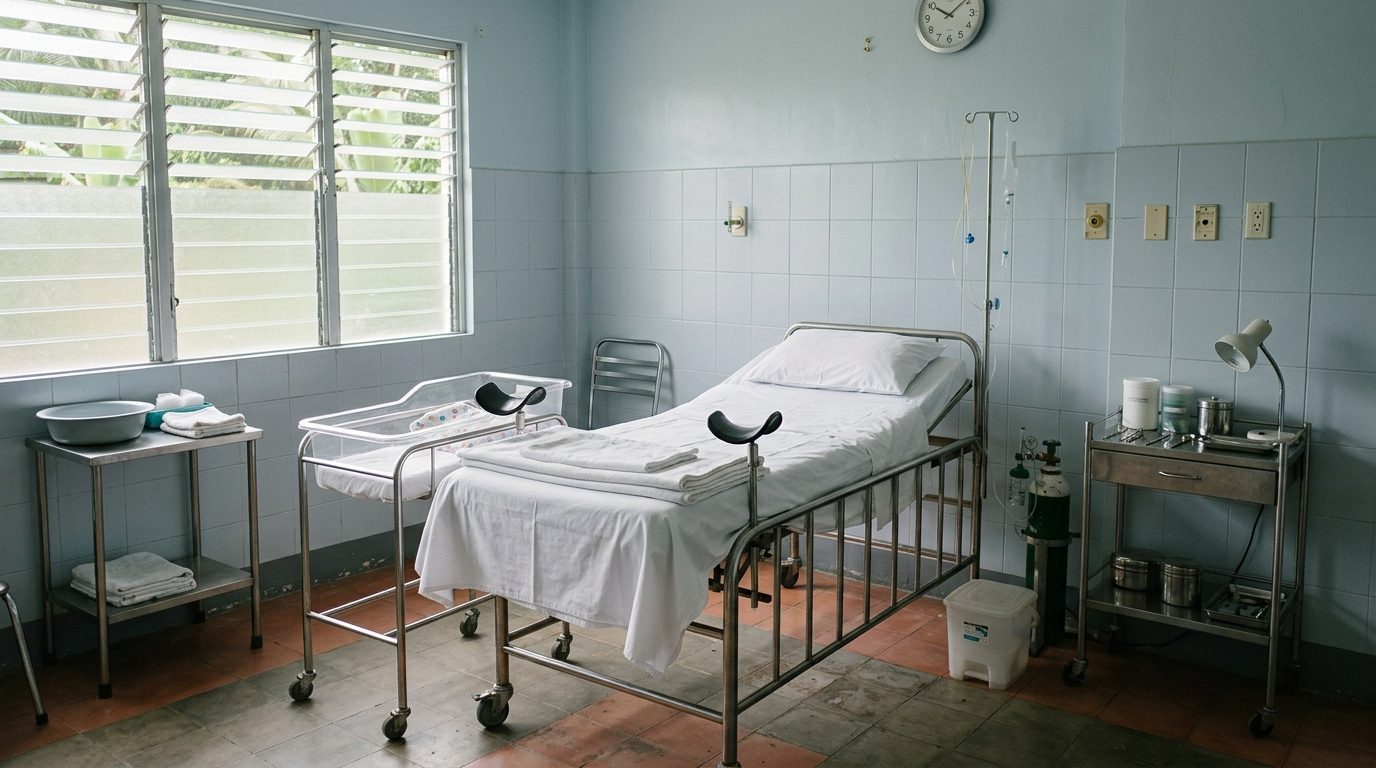
| Birthing home or lying-in clinic (DOH-licensed, PhilHealth-accredited; often run by the RHU or city health office) | Low-risk normal spontaneous delivery and immediate postpartum care; stabilises and refers complications to a hospital | ₱14,000 for the delivery; prenatal visits ₱1,100 to ₱3,750 per trimester block, laboratory sets ₱500 to ₱2,000, ultrasounds ₱1,000 each; three postpartum visits ₱1,350; referral fee ₱1,600 to ₱8,500 if labour is transferred | None for covered services in basic accommodation, per the PhilHealth FAQ |
| Hospital, Level 1 to 3, public or private, ward bed | All deliveries including caesarean, high-risk pregnancies, newborn complications | Normal delivery ₱29,000; caesarean ₱58,000, or ₱62,000 after an attempted vaginal delivery following a previous caesarean; professional fees included | None: no co-payment and no balance billing in a ward or basic bed, public or private |
| Hospital, semi-private or private room | As above, with room choice and choice of doctor | Same package rates | Semi-private: a fixed co-payment cap (the circular table sets ₱23,000 for a normal delivery); private room: everything beyond the package |
| Home | Not recommended; deliveries by a hilot are prohibited under DOH policy | Nothing | Whatever the attendant charges, plus any local fine |
The private-room column is where bills grow. A 2026 guide by the insurance broker Alea estimates ₱50,000 to ₱250,000 for a normal delivery and ₱80,000 to ₱400,000 for a caesarean at a standard private hospital, and ₱300,000 upward at the top Metro Manila hospitals. For comparison, the Philippine General Hospital rate card lists a ₱5,000 service rate for a low-risk normal delivery. Which hospital level you need is explained in our guide to hospital levels.
On home birth: DOH Administrative Order 2008-0029 promotes facility-based delivery and the 2011 MNCHN manual prohibits deliveries by traditional birth attendants, but there is no national ban. Local governments filled the gap: a study of 4,371 barangays in Eastern Visayas found 77.6 percent had an ordinance against non-institutional delivery, with first-offence fines of ₱200 to ₱10,000, and that the ordinances did raise facility delivery rates. Ask your health center what applies in your barangay.
What happens if the pregnancy is high risk?
Your care coordinator tells you whether the pregnancy is low or high risk and refers you to a hospital if it is not suitable for a birthing home. The hospital circular FAQ confirms that a medically indicated caesarean, dilatation and curettage (₱36,500) and treatment of incomplete abortion (₱24,000) are covered, and that a facility which makes you buy medicines or supplies already in the package must refund you before discharge. For women at 24 to 36 weeks at risk of preterm delivery, the PhilHealth benefits page lists prevention packages of ₱600 to ₱3,000 and ₱4,000 for a coordinated transfer from a lower-level facility. In an emergency during labour, the lying-in clinic must stabilise you and transfer you; our guide to medical emergencies covers ambulances and the no-deposit rule.
What does the newborn get?
PhilHealth's Newborn Care Package has been ₱2,950 since Circular 2018-0021 took effect on 6 January 2019. It pays for essential newborn care (immediate drying, skin-to-skin contact, cord clamping, eye ointment and vitamin K), the first hepatitis B and BCG doses, the expanded newborn screening blood test and the hearing screening, in any accredited facility that performs deliveries, provided the baby stays at least 24 hours. The 2026 maternity circular says newborns are covered automatically and that an updated newborn benefit will come in a separate circular.
Registration, leave and breastfeeding: what are your rights after the birth?
Registration. Act 3753 requires the attending physician or midwife, or either parent, to send the birth declaration to the local civil registrar within 30 days. Facilities normally prepare the certificate of live birth.
Leave. Republic Act 11210 gives 105 days of paid maternity leave for every live birth, normal or caesarean, in government, private and informal work, with an option of 30 more days unpaid, 15 extra paid days for solo parents, and 60 paid days for miscarriage or emergency termination. Private-sector workers claim the daily benefit from SSS if they have three monthly contributions in the twelve months before the semester of childbirth.
Breastfeeding. Republic Act 10028 requires every workplace and public establishment to set up a lactation station with a washbasin, a refrigerator for expressed milk, power outlets, a table and seats. PhilHealth's three postpartum visits include lactation and nutrition management, family planning and mental health screening.
Facilities that deliver babies near you include People's Health Center and Lying-In Clinic, Dinapigue Rural Health Unit with Birthing Center and the prenatal clinic at Carmona Rural Health Unit; more are under clinics and hospitals.
Frequently asked questions
- How much does PhilHealth pay for giving birth in 2026?
- Under PhilHealth Circulars 2026-0005 and 2026-0006, effective 30 April 2026, a normal spontaneous delivery is paid at ₱29,000 in a Level 1 to Level 3 hospital and ₱14,000 in a non-hospital birthing facility such as a lying-in clinic or birthing home. A caesarean section is ₱58,000, or ₱62,000 when done after an attempted vaginal delivery following a previous caesarean. Prenatal visits, laboratory tests, ultrasound and three postpartum visits are paid on top. In a ward bed there is no co-payment and no balance billing.
- Is prenatal check-up free at the health center?
- Yes. Rural health units and city health centers give prenatal consultations, iron, folic acid and calcium supplements, tetanus vaccination and deworming without charge, and PhilHealth's Expanded Maternity Care Benefit now pays accredited facilities for eight visits: one in the first trimester, two in the second and five in the third, plus a first-trimester laboratory set (pregnancy test, blood typing, CBC, urinalysis, hepatitis B, HIV and syphilis screening), an OGTT, and two ultrasounds. You will be assigned a care coordinator who follows you through to delivery.
- Can I give birth at a lying-in clinic?
- Yes, if the pregnancy is low risk. A DOH-licensed, PhilHealth-accredited birthing home or lying-in clinic handles normal spontaneous deliveries and immediate postpartum care, paid at ₱14,000 by PhilHealth, and must stabilise and refer you to a hospital if complications arise during labour, for which PhilHealth pays the clinic a separate referral fee. High-risk pregnancies, such as previous caesarean, twins or pre-eclampsia, are delivered in a hospital.
- Is home birth illegal in the Philippines?
- There is no national law banning it, but DOH Administrative Order 2008-0029 and the 2011 MNCHN Manual of Operations push facility-based delivery and prohibit deliveries assisted by traditional birth attendants (hilot). Many cities, municipalities and barangays have passed their own ordinances: a study of 4,371 barangays in Eastern Visayas found 77.6 percent had an ordinance against non-institutional delivery, with fines from ₱200 to ₱10,000. Ask your health center what applies where you live.
- How much does it cost to give birth in a private hospital?
- Well above the PhilHealth package once you choose a private room. A 2026 guide by the health insurance broker Alea estimates ₱50,000 to ₱250,000 for a normal delivery and ₱80,000 to ₱400,000 for a caesarean at a standard private hospital, and ₱300,000 upward at the top Metro Manila hospitals. In a public hospital ward the PhilHealth case rate is meant to cover the whole bill; the Philippine General Hospital lists a ₱5,000 service rate for a low-risk normal delivery.
- How long is maternity leave in the Philippines?
- 105 days with full pay for every live birth, normal or caesarean, under Republic Act 11210, with an option to extend by 30 days without pay. Solo parents get 15 more paid days. For miscarriage or emergency termination of pregnancy the leave is 60 days with full pay. It applies to government and private sector workers and to those in the informal economy who are SSS members with at least three monthly contributions in the twelve months before the semester of childbirth.
- When do I need to register my baby's birth?
- Within 30 days. Act 3753, the civil registry law, requires the attending physician or midwife, or either parent, to send the birth declaration to the local civil registrar within thirty days of the birth. Hospitals and lying-in clinics usually prepare the certificate of live birth for you; if you deliver elsewhere, go to the city or municipal civil registrar yourself. The registered record is what the PSA later prints as the child's birth certificate.