Free Vaccines at Health Centers: The National Immunization Schedule and Where to Get Them
Quick Answer: Every vaccine on the DOH National Immunization Program is free at rural health units, city health centers and barangay health stations: BCG and hepatitis B at birth, pentavalent, oral and injectable polio and pneumococcal vaccine at 6, 10 and 14 weeks, MMR at 9 and 12 months, and measles-rubella, tetanus-diphtheria and HPV through the school-based programme. This guide sets out the 2026 schedule by age, who qualifies, catch-up doses, adult vaccines, what the same shots cost privately, and why the 45 percent rise in measles cases in early 2026 makes the free schedule worth finishing.
Every vaccine on the DOH National Immunization Program (NIP) is free at rural health units, city health centers and barangay health stations, and Republic Act 10152 makes that a legal right for every child up to five years old at any government hospital or health center. The schedule runs from BCG and hepatitis B at birth, through pentavalent, polio and pneumococcal shots at 6, 10 and 14 weeks and MMR at 9 and 12 months, to measles-rubella, tetanus-diphtheria and HPV given in school. It matters more this year: the DOH counted 1,627 measles and rubella cases in the first eleven weeks of 2026, up 45 percent, and 68 percent of the patients were unvaccinated, according to Rappler. This guide lists the schedule, who gets it free, catch-up rules, adult vaccines and private prices. Health centers are listed under health offices and rural health units on Healthcare Philippines.
What is on the schedule, and at what age?
The table follows the 2026 Childhood Immunization Schedule of the Philippine Pediatric Society, PIDSP and the Philippine Foundation for Vaccination, which prints the NIP schedule alongside the society recommendations.
| Vaccine | Age | Doses | Free at the health center? |
|---|---|---|---|
| BCG (tuberculosis) | At birth, preferably within the first two months | 1 | Yes; catch-up up to 1 year |
| Hepatitis B, monovalent | Within 24 hours of birth | 1 (doses 2 to 4 come in the pentavalent) | Yes; catch-up birth dose up to 14 days |
| Pentavalent (DTwP-Hib-HepB) | 6, 10 and 14 weeks | 3 | Yes; catch-up doses available |
| Bivalent oral polio (bOPV) | 6, 10 and 14 weeks | 3 | Yes |
| Inactivated polio (IPV) | 14 weeks and 9 months | 2 | Yes |
| Pneumococcal conjugate (PCV) | 6, 10 and 14 weeks | 3 | Yes; catch-up doses available |
| MMR (measles, mumps, rubella) | 9 months and 12 months | 2 | Yes; from 6 months during outbreaks |
| Measles-rubella (MR), school-based | Grade 1 and Grade 7 | 1 each | Yes, in public schools |
| Tetanus-diphtheria (Td), school-based | Grade 1 and Grade 7 | 1 each | Yes, in public schools |
| HPV, girls | Grade 4, or age 9 in the community programme | 2, one year apart | Yes |
| Rotavirus, varicella, hepatitis A, flu, JE, typhoid | Per society calendar | Varies | No: recommended by PPS/PIDSP but not on the NIP list in the 2026 calendar |
A child is counted as fully immunised at 12 months with one BCG, three pentavalent, three oral polio and two measles-containing doses. On that measure, partial 2024 data showed 61 percent of eligible children, 1,459,353 of 2,392,392, fully immunised as of January 2025, according to the DOH, UNICEF and WHO, which also noted the number of zero-dose children fell from 1 million in 2021 to 163,000 in 2023.
Who gets them free, and where?
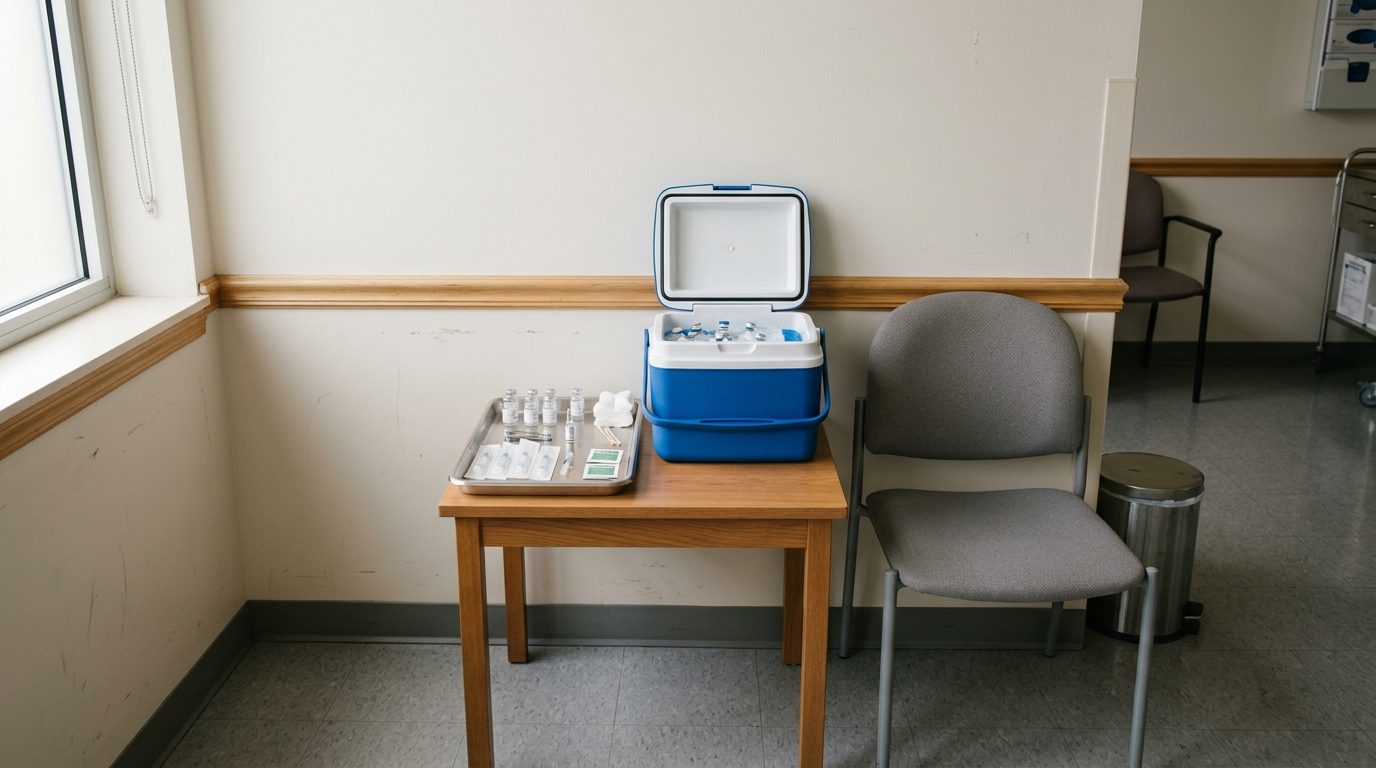
Any child, at any government health facility. The health center nearest you is the usual place: it holds a fixed immunisation day each week, keeps the vaccines in a cold chain, and records each dose on the child's immunisation card, which you should bring to every visit and keep for school enrolment. City health offices run the same programme through their district health centers, described in our guides to rural health units and city health offices; a few cities take online bookings, covered in how to book a health center appointment. Section 3 of RA 10152 also requires the hepatitis B birth dose to be given within 24 hours in every hospital, infirmary, health center and lying-in clinic, public or private, and within seven days if the baby was born elsewhere.
Catch-up follows the PIDSP annotations: an interrupted series is resumed without repeating doses, the NIP gives BCG to unvaccinated infants up to one year, the hepatitis B birth dose up to 14 days, and catch-up pentavalent and PCV doses. Children who had vaccines at a private paediatrician are often missing from the government count, so bring the private card too.
What about school-based and adult vaccines?
The DOH reinstated the school-based programme, Bakuna Eskwela, in October 2024 with the Department of Education: measles-rubella and tetanus-diphtheria for Grades 1 and 7, and HPV for Grade 4 girls. GMA News reported in December 2024 that the President had funded both HPV doses for every nine-year-old girl at about ₱4,000 a dose, and that 505,010 Grade 4 girls, 64.48 percent of the target, had received a first dose by 13 December 2024. Consent forms go home through the school; a girl who misses the school dose can get it at the health center at age nine.
For adults, the free list is short. The Expanded Senior Citizens Act requires the DOH to give free influenza and pneumococcal vaccination to indigent senior citizens and to residents of government homes for the elderly; other seniors and persons with disability get the 20 percent discount and VAT exemption when they buy the vaccine, as our guide to senior and PWD discounts explains. Pregnant women get tetanus vaccination free through the prenatal programme, paid by PhilHealth's maternity benefit. COVID-19 vaccine does not appear on the 2026 childhood calendar; ask your health center what adult stock it holds.
What do the same vaccines cost privately?
Private paediatric clinics and hospital vaccination centres charge per dose, and the non-programme vaccines are the expensive ones. The Health Secretary's own figure for HPV is about ₱4,000 a dose. A dated 2020 price list from ManilaShaker put pentavalent or hexavalent combinations at ₱3,000 to ₱3,500, pneumococcal conjugate at ₱4,000 to ₱5,000, rotavirus at ₱2,500 to ₱3,500, MMR at ₱1,500 and up, and flu at ₱1,300 to ₱1,500; prices have risen since, so ask the clinic for its current rate. Private clinics that give vaccines are listed under clinics. Many families use the health center for everything on the NIP and pay privately only for rotavirus, varicella and the yearly flu shot.
Why finish the schedule now?
Measles is back because coverage slipped. The DOH told Rappler in April 2026 that national measles-rubella coverage was around 66 percent, leaving about 821,000 children unvaccinated, and that BARMM (344 cases), Soccsksargen (322), Davao Region (163), Metro Manila (158) and Central Luzon (154) led the count. A four-month-old girl in Quezon City, too young for her first dose, died of measles on 25 March 2026. The two free MMR doses at 9 and 12 months, and the school MR dose, are what protect the infants who cannot yet be vaccinated. Bring the card to Carmona Rural Health Unit, Guadalupe Viejo Health Center, the district centers of the Quezon City Health Department, or the health center nearest you.
Frequently asked questions
- What vaccines are free at the health center in the Philippines?
- The National Immunization Program vaccines: BCG, monovalent hepatitis B at birth, pentavalent (diphtheria, tetanus, pertussis, Hib and hepatitis B), bivalent oral polio, inactivated polio, pneumococcal conjugate vaccine and MMR or measles-rubella. Through the school-based programme the DOH also gives measles-rubella and tetanus-diphtheria in Grades 1 and 7 and HPV to Grade 4 girls. Republic Act 10152 makes the basic immunisation free at any government hospital or health center for children up to five years old.
- What is the immunization schedule for babies in the Philippines?
- Per the 2026 PIDSP calendar, which prints the NIP schedule: BCG and hepatitis B at birth; pentavalent, oral polio and PCV at 6, 10 and 14 weeks; inactivated polio at 14 weeks and 9 months; MMR at 9 months and 12 months. Hepatitis B doses two to four come inside the pentavalent shots. Then measles-rubella and Td in Grade 1 and Grade 7, and HPV in Grade 4 for girls, all through the school programme.
- Is the HPV vaccine free in the Philippines?
- Yes for girls. The NIP gives two doses a year apart, either in Grade 4 through the school-based programme or at age nine through the community programme. The Health Secretary said in December 2024 that the vaccine costs about ₱4,000 a dose privately and that the President had funded both doses for every nine-year-old girl; 505,010 Grade 4 girls had received a first dose by 13 December 2024. Boys are not yet covered.
- Can my child catch up on missed vaccines?
- Yes. The NIP gives BCG catch-up to infants up to one year old, the hepatitis B birth dose up to 14 days old, and catch-up doses of the pentavalent and pneumococcal vaccines to infants who missed them; an interrupted series is resumed, not restarted. Bring the child's immunisation card to the health center and the nurse or midwife will work out the doses still due. During outbreaks the DOH may give measles vaccine from six months.
- Are flu and pneumonia vaccines free for senior citizens?
- For indigent seniors, yes. The Expanded Senior Citizens Act requires the DOH to give free influenza and pneumococcal vaccination to indigent senior citizens and to residents of government homes for the elderly, and several cities run their own free flu drives at health centers. Every other senior, and every person with disability, gets the 20 percent discount and VAT exemption on flu and pneumococcal vaccines bought privately.
- How much do vaccines cost at a private clinic?
- Several thousand pesos per dose for the non-programme vaccines. The Health Secretary put HPV at about ₱4,000 a dose in December 2024. A 2020 price list published by ManilaShaker gave pentavalent or hexavalent at ₱3,000 to ₱3,500, pneumococcal conjugate at ₱4,000 to ₱5,000, rotavirus at ₱2,500 to ₱3,500, MMR from ₱1,500 and flu at ₱1,300 to ₱1,500. Prices have risen since; ask the clinic for its current per-dose rate.
- Why are measles cases rising in 2026?
- Because too many children missed their doses. The DOH recorded 1,627 measles and rubella cases from 4 January to 21 March 2026, 45 percent more than the 1,121 in the same period of 2025, and 68 percent of the patients were unvaccinated. National measles-rubella coverage was about 66 percent, leaving roughly 821,000 children unvaccinated, and a four-month-old in Quezon City died of measles in March 2026. Two free MMR doses at 9 and 12 months prevent it.