Barangay Health Center, Rural Health Unit, City Health Office: What Each One Is and What It Offers
Quick Answer: The Philippines has about 26,000 barangay health stations and 2,700 rural health units and city health offices, and most people are entitled to free care at one of them. Here is what each level is for, who works there, what it costs and how to find yours.
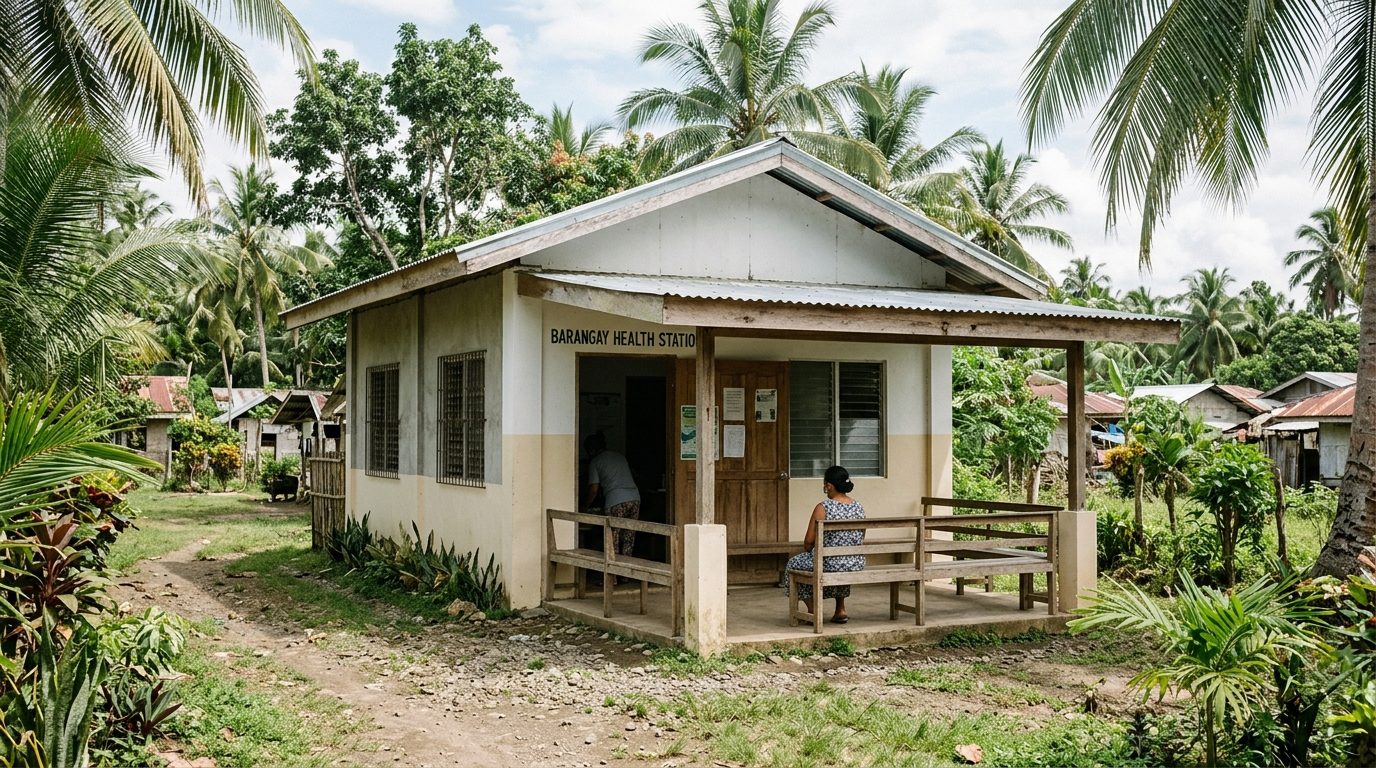
Nearly every Filipino lives within reach of a government primary care facility, and most people are entitled to free care at it. The system has three levels: the barangay health station (the small post in your barangay, run by a midwife and barangay health workers), the rural health unit or, in cities, the city health office and its health centers (the main facility with a doctor), and above them the district and provincial hospitals. This guide explains what each one is, who staffs it, what is free, and how to find and use the one nearest you. Browse them on Healthcare Philippines: rural health units and city and municipal health offices.
What is the difference between the three?
| Facility | Run by | Staff | What it does | What it cannot do |
|---|---|---|---|---|
| Barangay health station (BHS, barangay health center) | Barangay and municipal or city government | Rural health midwife; barangay health workers (about one per 20 households); barangay nutrition scholar | Check-ups, growth monitoring, immunisation days, prenatal and postnatal visits, family planning, first aid, basic medicines, health education, referrals | No doctor on site most days; no laboratory; no admissions |
| Rural health unit (RHU), municipal health center | Municipal government, headed by the municipal health officer | Physician, public health nurses, midwives, medical technologist, sanitary inspector, dentist at many; on average about 36 staff serving 29 barangays | Doctor consultations, main immunisation and maternal care programme, TB DOTS, animal bite treatment, basic laboratory, dental, birthing facility at many, PhilHealth YAKAP registration and benefits, referrals to hospital | No overnight admission (except lying-in for deliveries); no surgery; limited imaging |
| City health office (CHO) and its health centers | City government, headed by the city health officer | Doctors, nurses, midwives, medical technologists, dentists, sanitary inspectors across several health centers per district | Everything an RHU does, spread across district health centers, plus social hygiene clinics, animal bite centers, mental health units and city laboratories | Same limits as an RHU; hospital care is at the city or DOH hospital |
The relationship is a hierarchy. The Department of Health's own description is that barangay health stations are extensions of the rural health unit, whose physician, dentist, medical technologist and sanitary inspector rotate to the stations on a schedule. A patient the midwife cannot treat is sent to the RHU; a patient the RHU cannot treat is referred to hospital.
Who runs them, and why does it matter?
Local governments, since the Local Government Code of 1991 devolved primary care. Municipalities run RHUs and barangay stations, cities run city health offices, and provinces run provincial and district hospitals. The Department of Health licenses facilities, sets standards, supplies vaccines and national programme commodities (TB drugs, family planning supplies, anti-rabies vaccine) and funds upgrades through the Health Facilities Enhancement Program. The Universal Health Care Act of 2019 (Republic Act 11223) is pulling these back into province-wide and city-wide health systems so that a patient's records and referrals follow them from the barangay to the hospital.
It matters because quality varies with the local government. Two neighbouring towns can have very different RHUs: one with a birthing facility, a laboratory and a full-time doctor, the other with a doctor two days a week. The Department of Health's manual of standards for primary care facilities sets the floor; not every facility reaches it.
What is free?
- Consultations with the doctor, nurse or midwife.
- Vaccines under the Expanded Program on Immunization for infants and children, and campaigns (measles, HPV, flu for seniors) as scheduled.
- Prenatal and postnatal care, and delivery at RHUs with a birthing facility; PhilHealth's maternity care package covers the rest.
- Family planning counselling and commodities.
- Tuberculosis diagnosis and treatment under DOTS.
- Animal bite treatment, including anti-rabies vaccine, at RHUs certified as animal bite treatment centers.
- Basic medicines from the facility's stock, and a wider list free through PhilHealth YAKAP: once registered with a YAKAP clinic, members and each dependant get consultations, 13 laboratory tests, six cancer screening tests on referral, and up to ₱20,000 a year of medicines from a list of 75 molecules at accredited pharmacies. Our PhilHealth YAKAP guide explains registration.
Cities sometimes charge for medical certificates and some laboratory tests for non-residents. Bring a valid ID and, where the city asks, proof of residence.
How many are there?
About 26,239 barangay health stations and 2,674 rural health units and city health centers, according to Statista's compilation of Department of Health data as of 2025, within more than 42,000 health facilities in the country. The Department of Health's National Health Facility Registry is the master list; Healthcare Philippines lists thousands of them with addresses, phone numbers and opening hours.
How do you find and use yours?
- Start with your barangay. Every barangay has a health station or a scheduled health day; the barangay hall knows where and when.
- Find the RHU or health center. Search rural health units or health offices on this site by town or city, for example Carmona Rural Health Unit in Cavite, Pasay City Health Office or Mandaue City Health Office.
- Check the schedule. Doctor consultations, immunisation, prenatal and dental days are often set days of the week. Call ahead; the number is on the listing.
- Bring ID and your PhilHealth number. Register for YAKAP at the first visit if you have not already.
- Book where you can. Makati, Quezon City and Manila run online queueing or appointment systems for their health centers; our guide to booking a health center appointment lists them.
- Ask for a referral when you need a hospital. It routes you to the right facility and matters for PhilHealth benefits; see public vs private hospitals and what PhilHealth covers.
For what a rural health unit offers in detail, read what a rural health unit offers for free. Browse all healthcare categories on Healthcare Philippines.
Frequently asked questions
- What is the difference between a barangay health station and a rural health unit?
- A barangay health station is the smallest unit: a midwife-run post in the barangay, staffed day to day by barangay health workers, offering check-ups, immunisation, prenatal visits, family planning and basic medicines. A rural health unit (called a city health office or health center in cities) is the municipality's main primary care facility, headed by a licensed physician (the municipal or city health officer) with nurses, midwives, a medical technologist and a sanitary inspector. Barangay stations are extensions of the RHU; its doctor, dentist and lab staff visit on a schedule.
- Are services at health centers free?
- Consultations, vaccines under the Expanded Program on Immunization, prenatal check-ups, family planning commodities, TB treatment through DOTS, animal bite treatment at certified centers and a basic list of medicines are free at government health centers. Laboratory tests and medicines beyond the basic list are free if you are registered with a PhilHealth YAKAP clinic, which most RHUs and city health centers are; some cities charge small fees for certificates.
- Who runs health centers in the Philippines?
- Local governments. Since the Local Government Code of 1991 devolved health services, municipalities run rural health units and barangay health stations, cities run city health offices and their health centers, and provinces run provincial and district hospitals. The Department of Health sets standards, licenses facilities, supplies vaccines and national programme commodities, and funds upgrades.
- Do I need to be a resident to use a health center?
- Health centers serve the residents of their catchment barangays and cities usually ask for proof of residence or a city ID for free services. In an emergency any facility will treat you. For PhilHealth YAKAP benefits you must be registered with that specific clinic, which you can do at the clinic, through the PhilHealth member portal or the eGovPH app.
- How many health centers are there?
- About 26,239 barangay health stations and 2,674 rural health units and city health centers as of 2025, according to Statista's compilation of Department of Health facility data, out of more than 42,000 health facilities nationwide. Healthcare Philippines lists thousands of them with addresses and phone numbers.
- What can a health center not do?
- Admit you overnight, do surgery, or run advanced imaging and laboratory tests. Its role is prevention, diagnosis and treatment of common conditions, and referral. If you need a hospital the health center refers you to the district, provincial or DOH hospital that serves your area, and a referral from a health center is often what unlocks PhilHealth's zero balance billing at a government hospital ward.